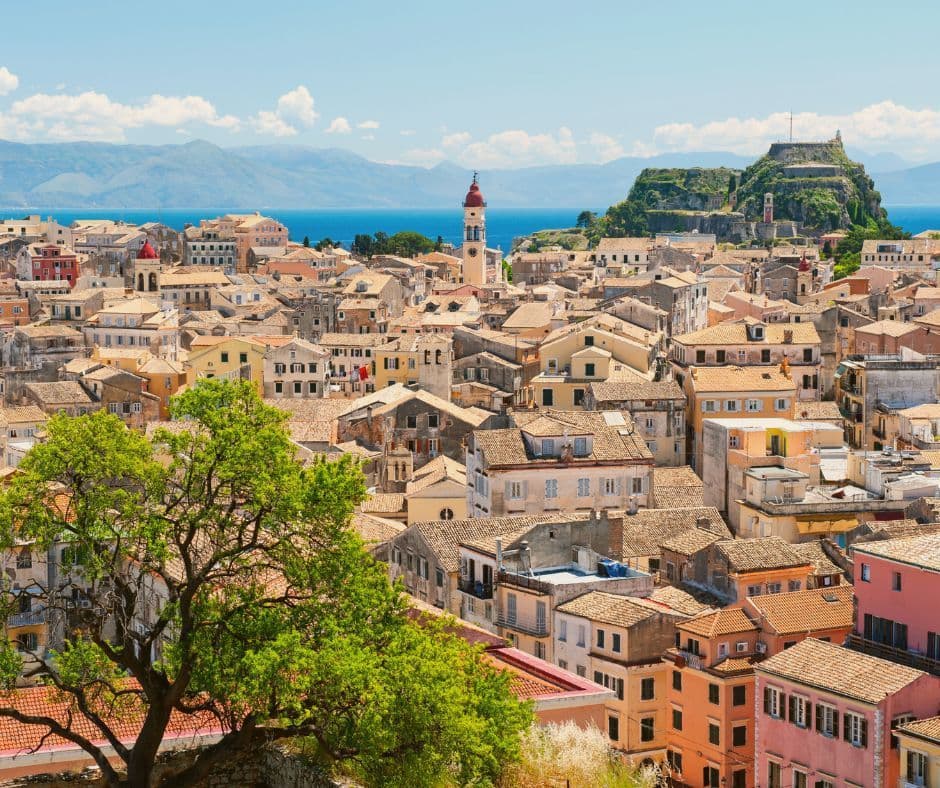
Corfu, the emerald jewel of the Ionian Sea, is renowned for its stunning Venetian architecture, turquoise waters, and vibrant cultural life. However, it is during the celebration of Corfu Easter that the island truly transforms, offering a spectacle unlike any other in Greece. The Corfiot Holy Week is a unique blend of solemn religious reverence, marching bands, and the island's most famous, ear-shattering tradition: the 'Botides' or 'pots throwing in Corfu'.
If you are planning a spring break or a cultural holiday to the Ionian Islands, this ultimate Corfu travel guide will walk you through the highlights of the island's magnificent Pascha (Easter) customs.
A Venetian & Orthodox Fusion: Why Corfiot Easter is Unique
What sets Corfu's Easter apart is the powerful influence of its centuries-long Venetian rule. While the rest of Greek Orthodox Easter maintains a generally subdued observance, Corfu injects a distinct flair and theatricality into its services. This unique fusion makes it one of the most compelling European Easter celebrations.
Key to this is the participation of the island's numerous Corfu philharmonic bands. These bands, most famously the Old, the Red and the New play a central role, accompanying religious processions in Corfu with classical music that lends a majestic, often mournful, ambiance to the week.
The Sacred Journey: Holy Week Highlights. The Corfiot Easter follows the Greek Orthodox calendar.
Good Friday: Epitaphios Procession
This is the day of deep mourning, marked by the solemn procession of the Epitaphios (Christ’s funeral bier).
- Atmosphere: Unlike other parts of Greece, the Corfu Good Friday procession begins in the afternoon and early evening, creating a flow of solemn marches through the narrow kantounia (narrow alleys of Corfu Old Town).
- Music: The philharmonic bands accompany the bier playing poignant classical pieces, most famously Albinoni's Adagio and Chopin's Funeral March.
- The Main Event: The grandest procession is that of the Metropolitan Cathedral in Corfu Town.
Holy Saturday: The Day of the Botides
This is the peak of the Corfiot Easter experience and the moment everyone anticipates.
- Morning (9:00 AM): Procession of St. Spyridon
The revered relics of St. Spyridon, the island's patron saint, are carried in an early morning procession. - The Main Event (11:00 AM): The Pots Throwing Tradition
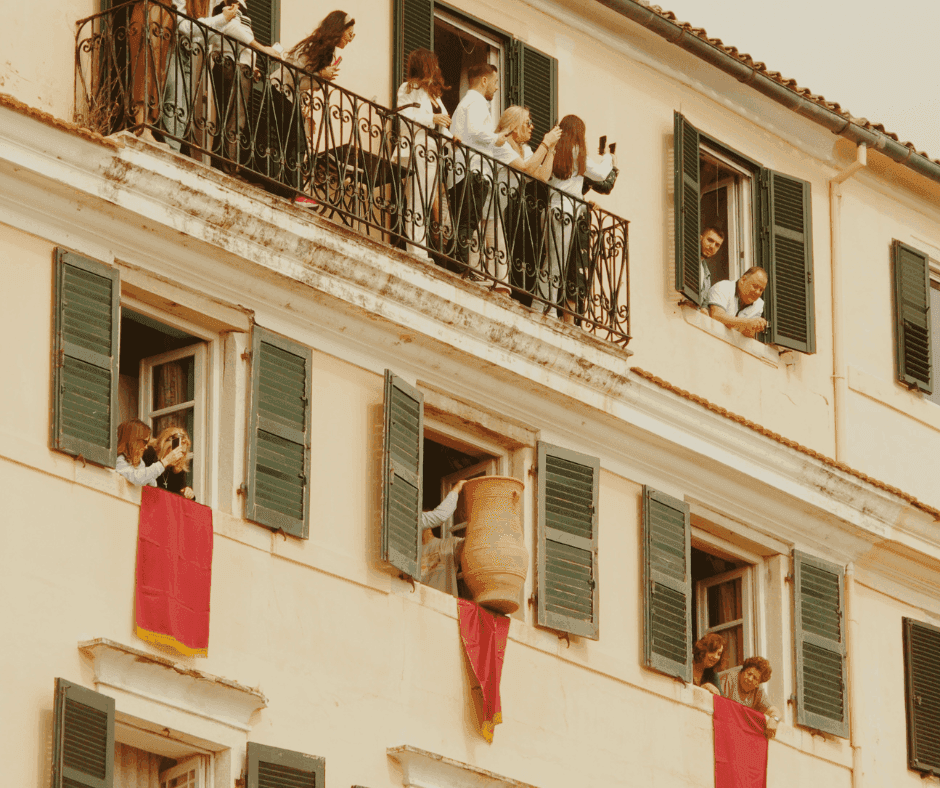
At precisely 11:00 AM, the 'First Resurrection' is announced, and the atmosphere explodes. From the windows and balconies surrounding the
Spianada Square and the Liston, residents hurl thousands of large, clay pots (botides), crashing onto the streets below. This is the most famous Corfu tradition.
Why the Pots?
The popular explanation links it to the Venetians' New Year tradition. The Corfiots adopted this custom, moving it to Easter and transforming it into a symbolic act of driving away evil and welcoming the new season (Spring). A shard of the broken pottery is considered a Corfu lucky charm.
Holy Saturday Night (Midnight): Resurrection The faithful gather in the Upper Esplanade for the Corfu Resurrection Service. As the priest chants, Christos Anesti(Christ is Risen), the sky ignites with a spectacular fireworks display in Corfu, signaling the start of the traditional Greek Easter Feast.
Corfiot Easter Feast Essentials
The long Fast of Lent is broken with traditional Corfiot cuisine:
- Tsoureki: The sweet, braided Easter bread.
- Magiritsa: A traditional post-resurrection soup made with lamb offal and rice.
A Note for Visitors: Planning Your Corfu Easter Trip
Corfu’s Easter is a massive cultural tourism event. Book your accommodations in Corfu Old Town and flights to Corfu well in advance. To fully experience the 'Botides', secure a spot early in the morning near the Liston or Spianada Square. This unique celebration is often cited as the best place to experience Greek Easter.
Corfu's Easter is a profound cultural immersion that stands apart from typical holidays, especially given that April in Corfu marks the pleasant transition from a mild, wet winter to the warm, lush Mediterranean spring. This ideal timing allows for exploration without the oppressive heat or peak-season crowds.
From the sorrowful, cinematic tunes of the marching bands accompanying the Good Friday processions to the joyous, symbolic chaos of the Holy Saturday 'Botides' the Holy Week offers a unique, memorable European spring holiday experience. While the sea may still be too cold for a swim, the richness of the cultural calendar, the comfortably warm days, and the island's vibrant, lush scenery make April the absolute best time to visit Corfu for travelers seeking a deep, authentic, and unique Greek experience.
Read also