The Art of Soap Making in Corfu: The Story of the Patounis Family
21 September 2026
Tucked away in the heart of Corfu Town, stepping through the doors of the Patounis Soap Factory feels less like entering a shop and more like traveling back in time. With its high wooden ceilings, weathered stone walls, and green blocks of olive oil soap stacked neatly in towering open-air drying racks, the workshop is a living museum. But this is no passive monument to history - it is a working, breathing piece of industrial heritage, powered by a family that has kept the traditional art of soap making alive for over 160 years.
The story of Patounis soap begins in 1850, when the brothers established their craft on the nearby Ionian island of Zakynthos. By 1891, the family expanded its operations, opening the factory in Corfu where it stands today. While the world around it underwent rapid industrialization and synthetic modernization, the Patounis factory remained stubbornly committed to the original, natural methods passed down through five generations. Today, the factory is spearheaded by Apostolos Patounis, who chose to preserve his family’s historic trade rather than abandon it for modern techniques. Recognizing its rare cultural significance, the facility was designated a protected industrial monument - the only operational historical soap factory in Greece using the original 19th-century methods.
What makes Patounis soap extraordinary is its absolute simplicity and purity. The process relies entirely on locally sourced olive products, avoiding chemical additives, synthetic fragrances, artificial colorants, or palm oil.
The manufacturing process follows three core traditional steps. First, virgin olive oil or olive pomace oil- extracted from the leftover crushed seeds and skins after the first olive press- is boiled in large open cauldrons alongside water and sea salt. The master soap maker tests the mixture continuously, relying on decades of sensory expertise to determine the exact moment the reaction is complete.
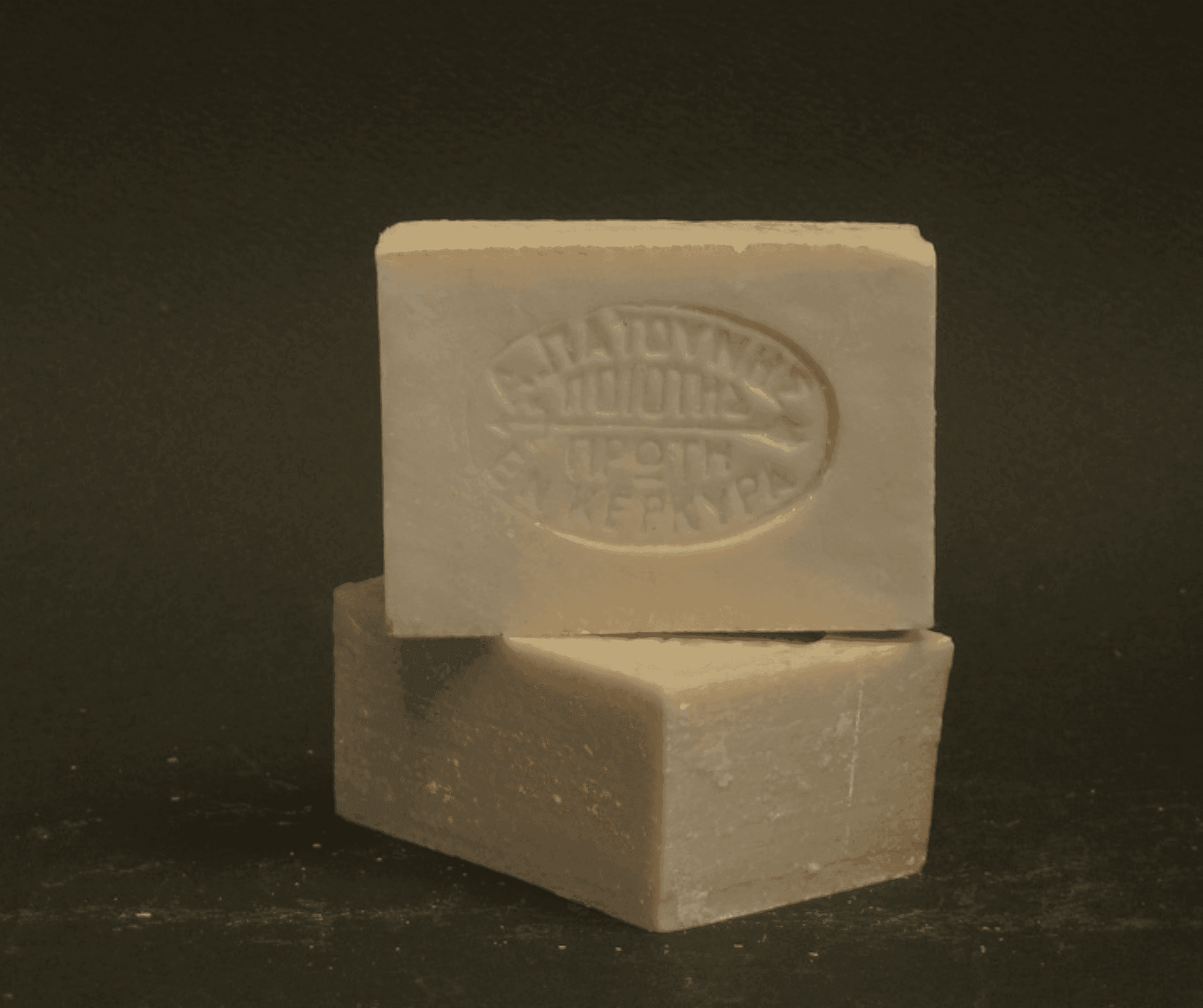
Once cooked, the liquid soap is poured onto large wooden drying floors, where it sets for several days into a thick, uniform sheet. Skilled artisans then step onto the hardened surface, marking grid lines with string and hand-stamping every single block with the traditional family crest using a heavy brass stamp. Finally, the blocks are hand-cut and stacked in open wooden racks to air-cure naturally for at least four months. This slow drying process naturally drives out moisture, leaving behind an exceptionally hard, long-lasting bar of pure soap.
The factory produces three main classic varieties, each tailored to a specific purpose:
Pure Olive Oil Soap (Green): Made using olive pomace oil rich in natural chlorophyll, this variety creates a mild, gentle lather that is deeply moisturizing and ideal for sensitive skin, face washing, and hypoallergenic needs.
Olive Kernel Soap: Crafted from saponified olive kernel oil, this strong, traditional soap is traditionally used for laundry, stain removal, and gentle home cleaning.
Combined Olive Soap: A balanced blend of pure olive oil and sea salt water that produces a creamy, nourishing daily bath bar suitable for all skin types.
In a contemporary world increasingly driven by mass production and plastic waste, the Patounis family's approach feels remarkably ahead of its time. Their products are fully biodegradable, zero-waste, vegan, and wrapped in simple paper packaging. For visitors traveling to Corfu, taking a tour of the factory provides a rare glimpse into the island's authentic industrial past. Watching the master soap makers work with equipment installed in the 1800s is an unforgettable reminder that true quality cannot be rushed and that some traditions are well worth preserving.
Read also